Home
Tele2
Simplifying the mobile experience around clearer
customer journeys for 18M+ users
Senior Product Designer
App Redesign
2020–2022
PROBLEM DEFINITION
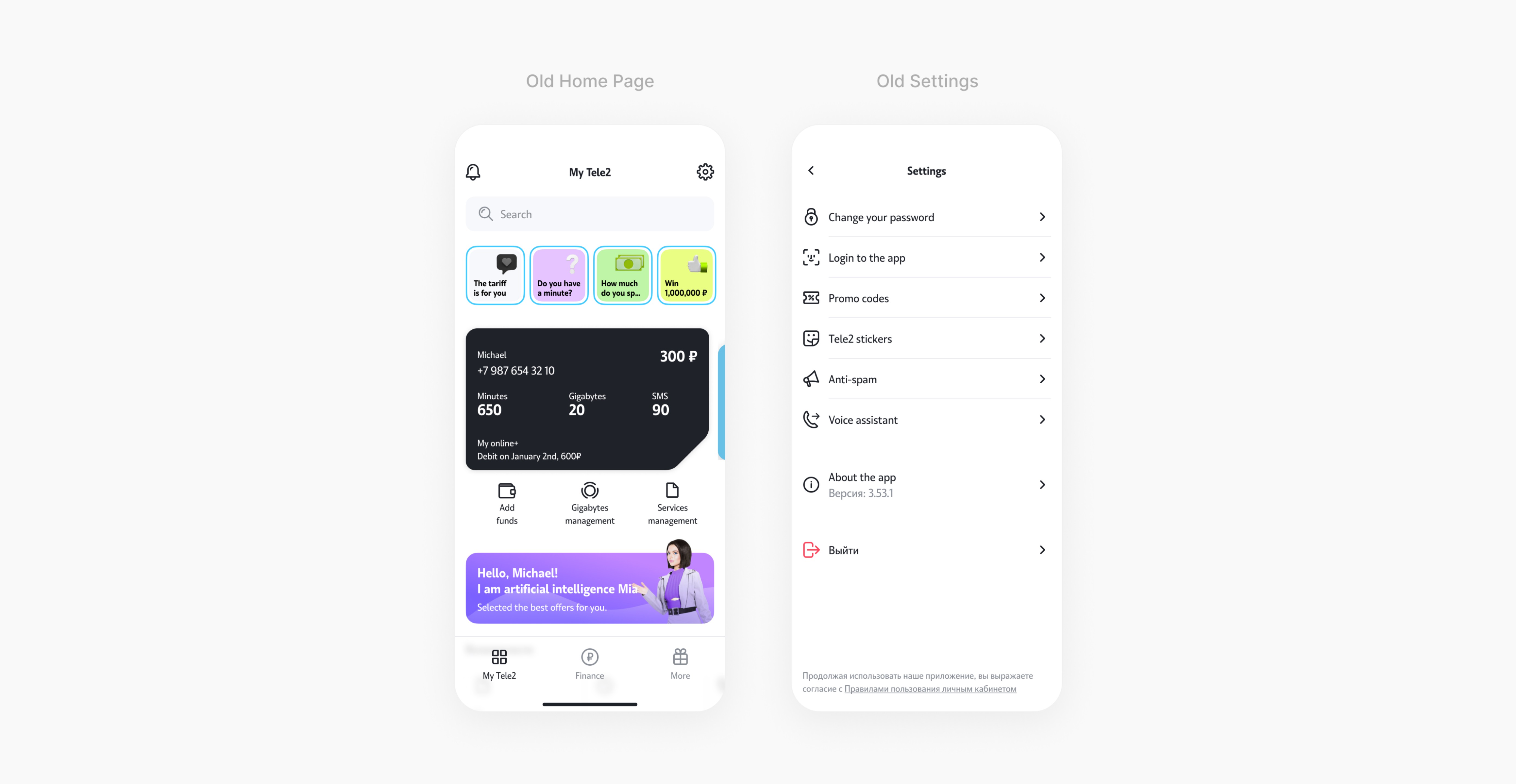
Visual overload results from diverse shapes, text styles, colors, and graphic accents like bright images, exacerbated by outdated design patterns unsuitable for modern applications
The challenge lies in the lack of easy access to critical information.
Users must take additional steps to meet their information needs
The absence of a user-centered interface
All of these improvements are expected to increase key business
metrics such as CSI, NPS, task completion time, and user retention
METHODOLOGY
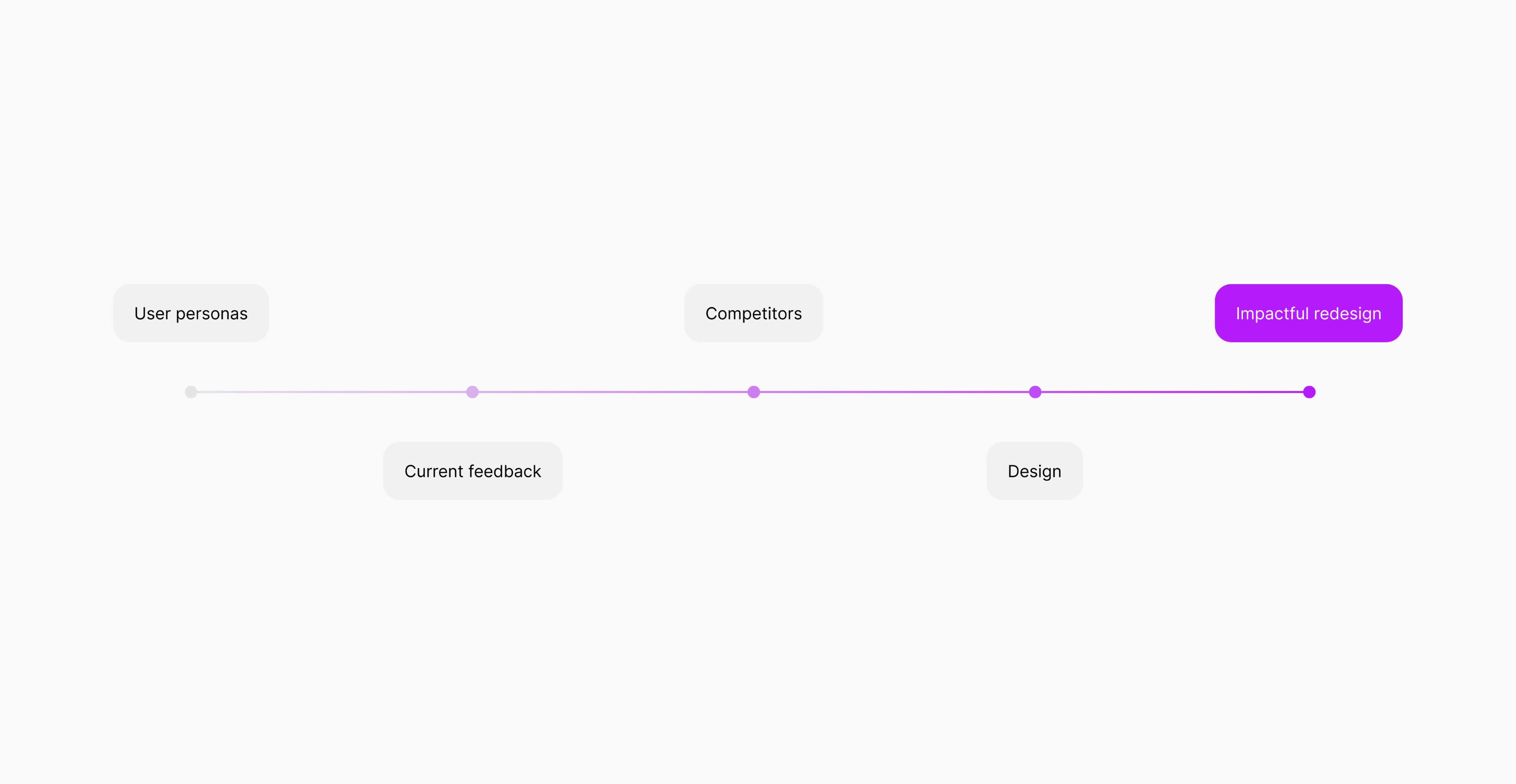
Phase 1: Analyze user personas and needs
This includes creating profiles of typical users, taking into account factors such as goals, pain points, and expectations
Phase 2: Analyze Current Feedback
This involves reviewing customer feedback, support tickets, and analytics to identify recurring issues and areas for improvement
Phase 3: Analyze Competitors
This involves studying competitors' mobile apps, identifying strengths and weaknesses and understanding resonant features
Phase 4: Design
Based on the insights from the user personas, current feedback, and competitive analysis, proceed to design
USER PERSONAS
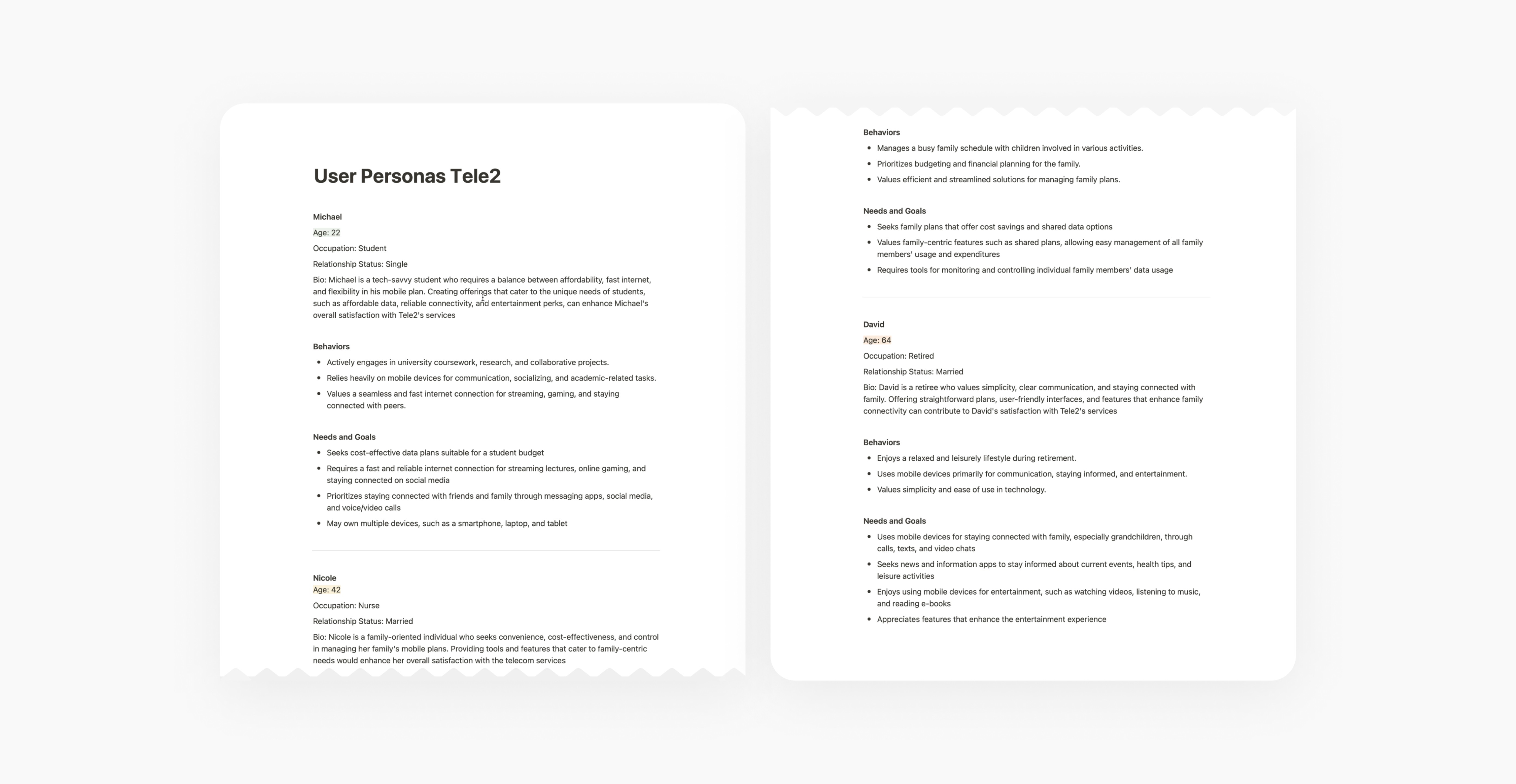
I worked with the product owner and business analysts and used insights from
customer journey analysis to understand the different needs
of Michael, Nicole,
and David. This gave me a clearer under-standing
of how to improve the app,
taking into account all aspects of usage
COMPETITOR ANALYSIS
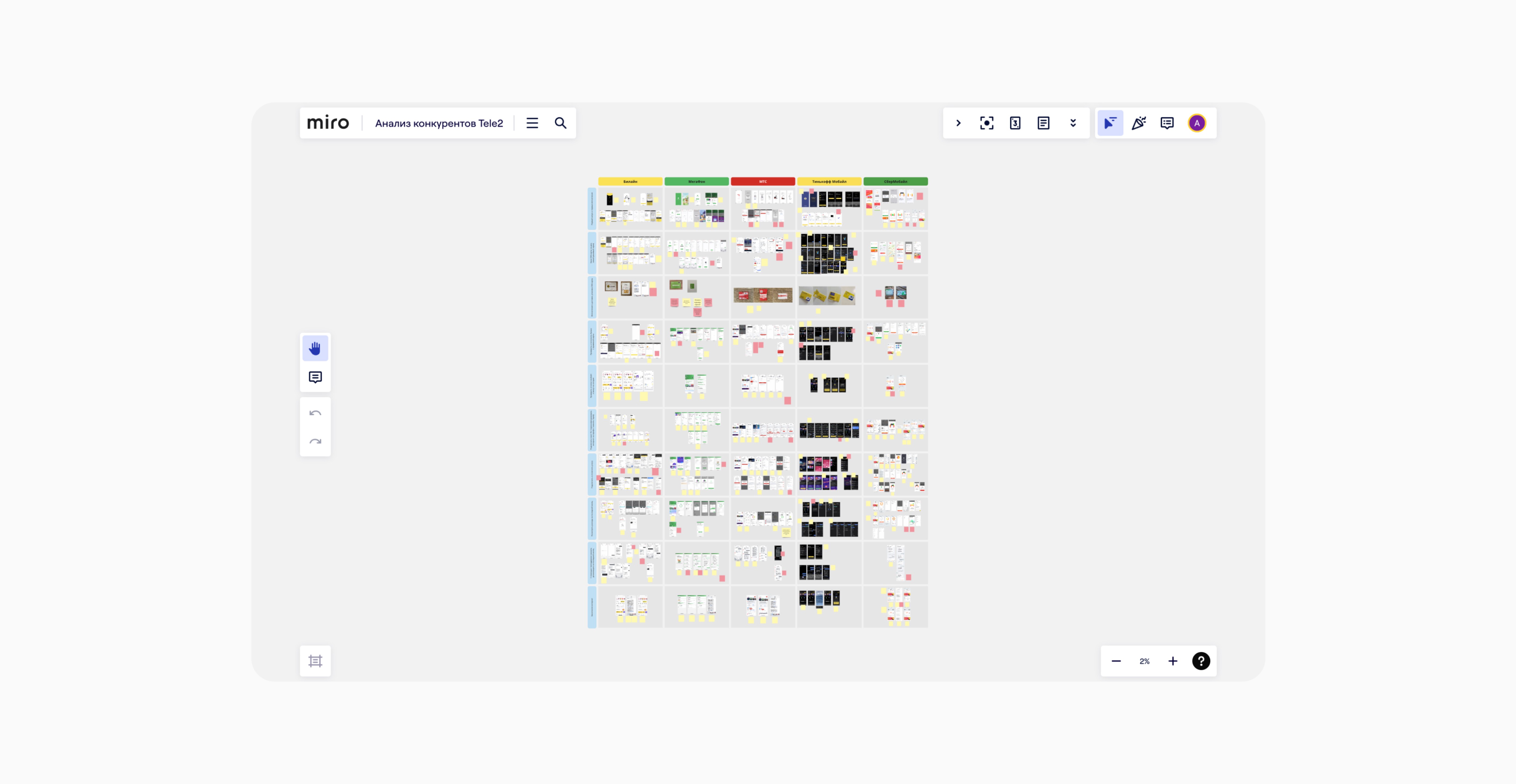
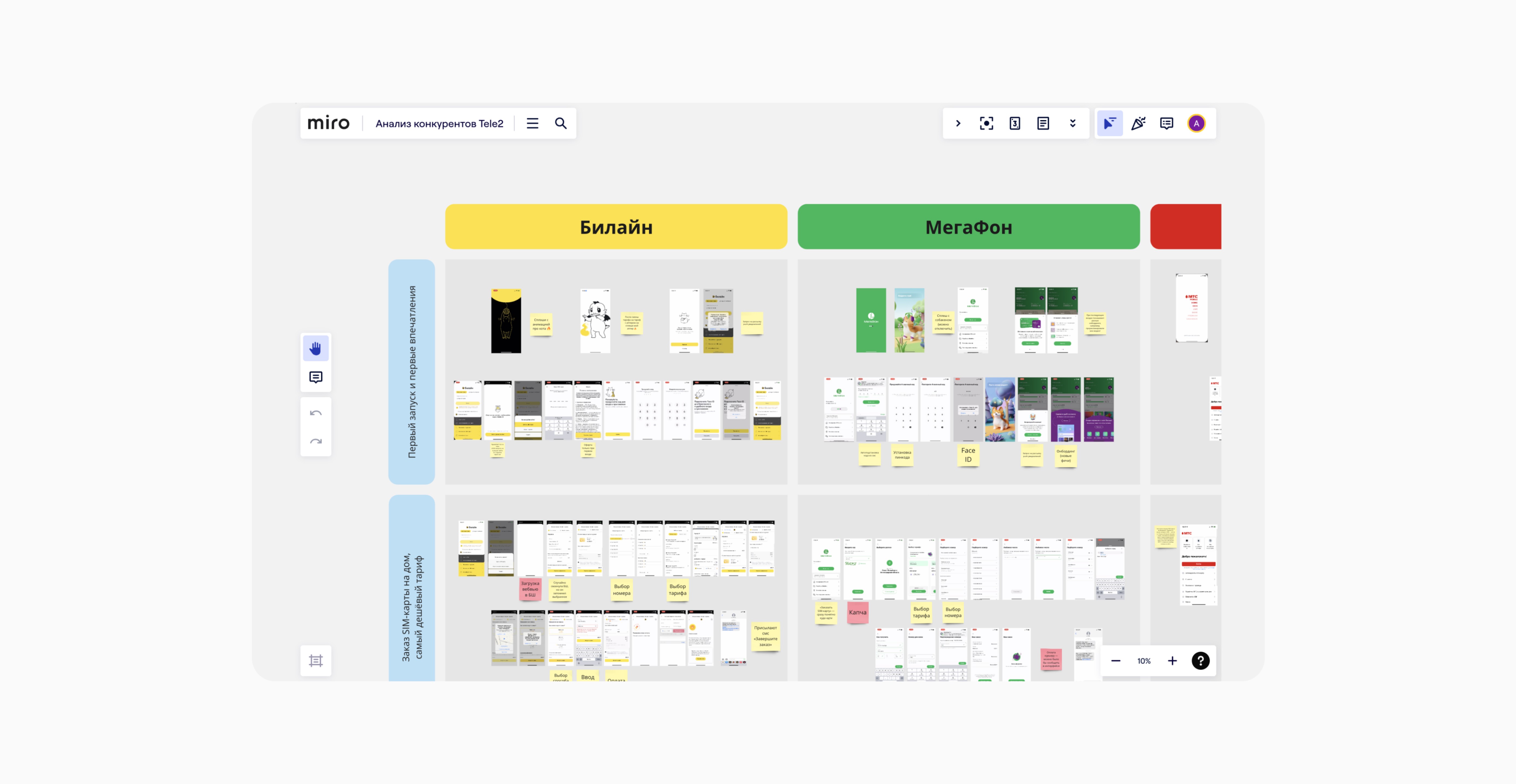
As the lead product designer, I oversaw the entire research process and led a team of two analysts. I proposed the research steps and specified exactly what we would be studying from our competitors.
As a team, we immersed ourselves in the five most popular mobile applications on the Russian market. Throughout the research, we immersed ourselves in every aspect of the product
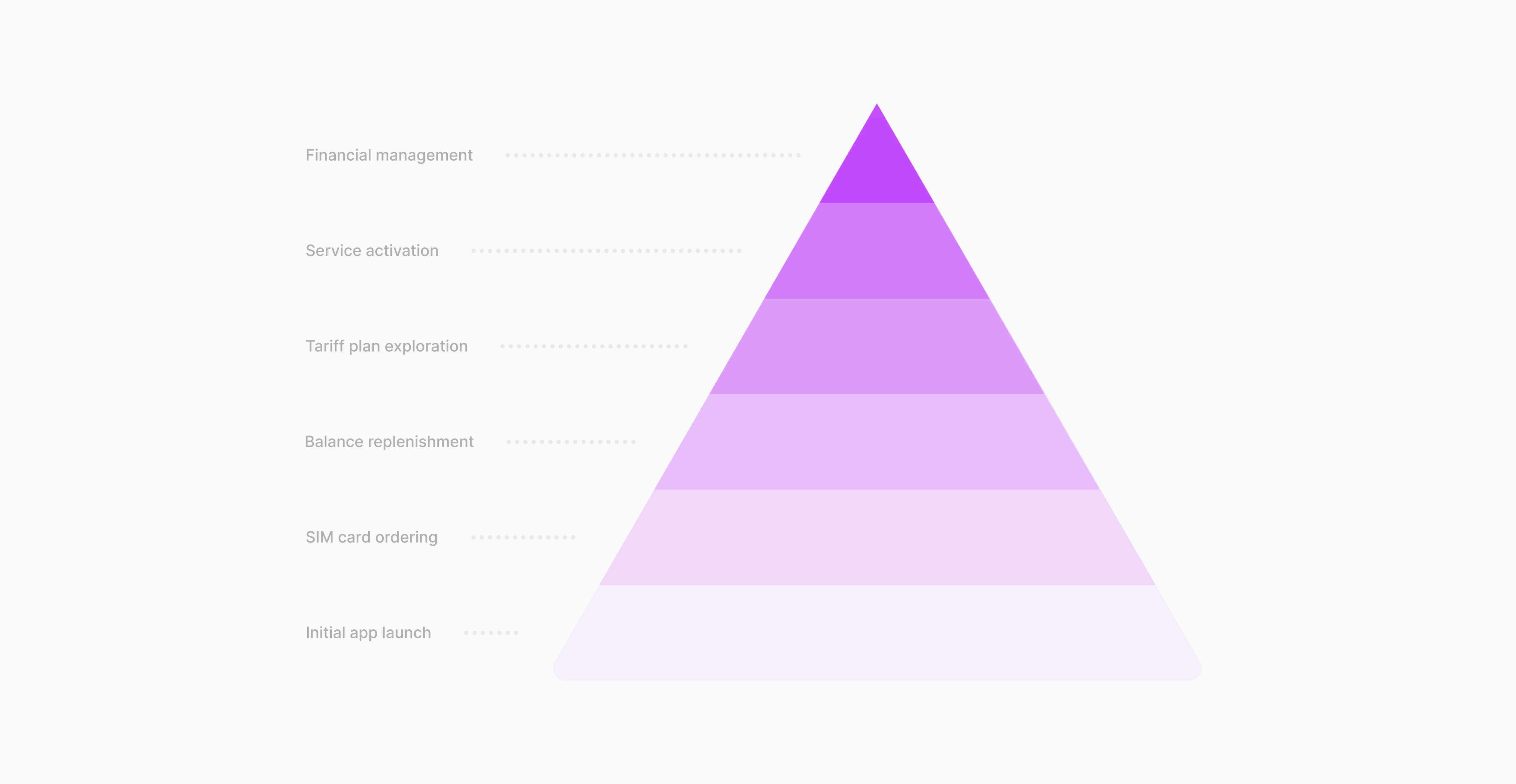
The result of our research included detailed process descriptions of the applications for the five products and a presentation of the findings to the company's top executives. The top product managers acknowledged that the product analyst and I had delivered one of the most comprehensive and effective competitor presentations to date.
KEY CHANGES
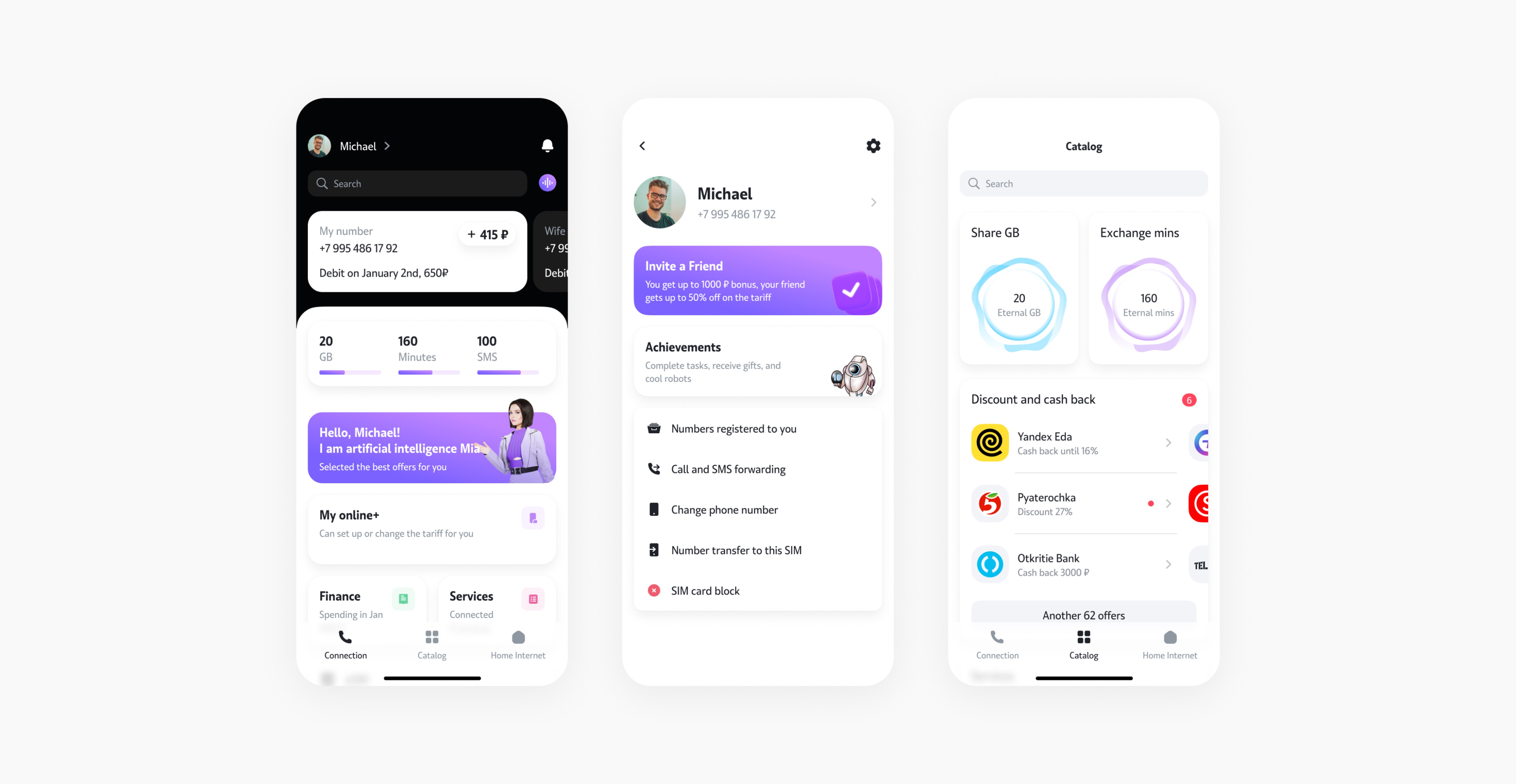
Crucially, we introduced a user profile concept, consolidating
all user-specific products, options and settings to create
a user-centric interface
Added a search feature and voice assistant for faster navigation, especially for advanced users seeking quick access
The main card is now divided into meaningful blocks, such as balance, tariff balances, and profile, ensuring simplicity without sacrificing information and reducing cognitive load
Tariff balances are enhanced with graphical elements that not only improve the aesthetics of the interface, but also help users quickly assess the status of their balances
Creating a separate tab for special offers and services allows users to see all offers in one space, enabling them to explore everything at once